The art of body mods as freedom of expression
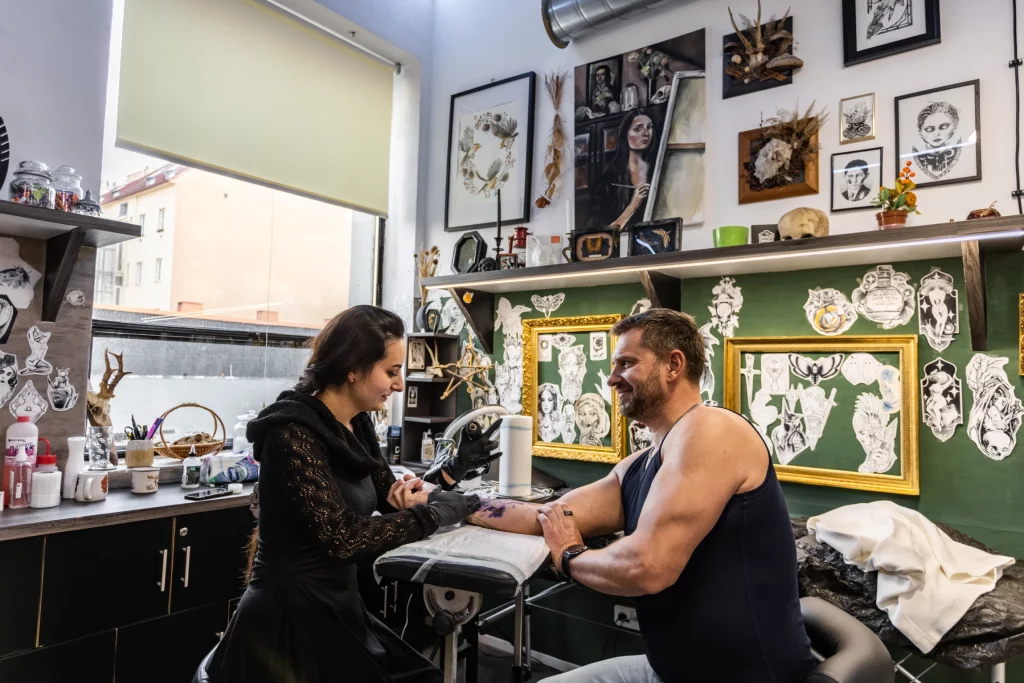
“Tattoos make you unique, but it also makes you a part of a group”, says Marie as she reflects on her journey of self-expression through tattoos and piercings. While she was a brand manager at Hell Tattoo Studio in Prague, Marie König Dudziaková didn’t just oversee the studio and its clientele, she became part of a culture that once faced discrimination in the Czech Republic.
To a traditional Czech citizen, body modifications or body arts were seen as an import from the West, often viewed as a threat to Czech culture. As ethnologist Martin Rychlík notes in his book Dějiny tetování (History of Tattoos), the socialist era virtually erased professional tattooing, forcing it into an amateur underground marked by poor workmanship and heightened health risks. After the communist takeover in 1948, tattoos in Czechoslovakia became associated almost exclusively with prisoners and members of the Roma community.
The stigma deepened as psychologists of the period described tattooed people as narcissistic, impulsive, and emotionally unstable, with weak discipline and problematic relationships to work and collectivist norms. Until 1989, tattooing remained tied to marginal or criminal environments, leaving almost no room for tattoos as an artistic or aesthetic expression. However, as the younger generation began to look to the West, they saw body modifications as a form of self-expression and individuality. In Marie’s words, “We want to live as they live their colourful lives, so this was definitely something that made tattoos and piercing popular”.
The shift to better acceptance
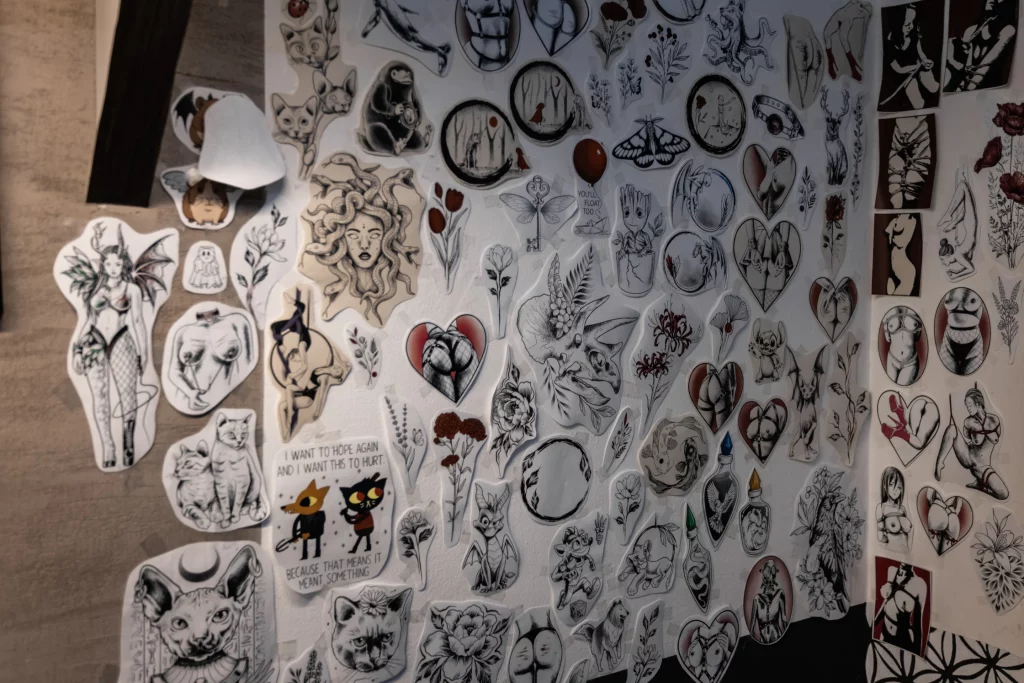
The shift from negative stereotypes to a celebratory attitude toward tattoos reflects broader global patterns, but in the Czech Republic, it has become deeply embedded in culture. Traditional values of individuality now find expression through tattoos and other forms of body modification, allowing people to craft both a personal and social identity. Modern tattoo studios now offer a wide range of styles, from minimalist lines to hyper-realistic images, showing that tattoos are no longer merely a fashion trend, but a meaningful cultural and social phenomenon. They have become a mirror of both individual lives and society at large, reflecting personal histories, values, and changing attitudes. For some, tattoos mark transitions, help process past experiences, or serve as a form of self-therapy, while for others they preserve heritage, convey social messages, or celebrate individuality.
Media representation has played a key role in this transformation. As anthropologist Alena Kajanová writes in Současné tetování z hlediska „rituálního“ jednání (Contemporary tattooing from the perspective of „ritual“ behavior), coverage of tattooed artists, athletes, and celebrities has helped break down lingering stigmas, showing that body modification can be both socially accepted and aesthetically valued. Tattoos today function simultaneously for the wearer and society: they allow personal expression, signal group identity, and reflect cultural trends. Individual choices of styles and symbolic purposes enable wearers to distinguish themselves while engaging with shared cultural meanings.
Judgment of body modifications has not been replaced by admiration, but it’s continuously changing and being accepted by more and more people. Marie König Dudziaková’s reflection captures this duality perfectly: “This is the paradox of tattoos that is associated with music for example, with people who do the same tattoo because of their favourite music group. So its a form of relating to each other.” She describes this community as one that celebrates the freedom to be themselves while participating in a broader culture of shared expression, while she explains that some of her tattooed friends stopped talking public transport as they were harassed because of their body modifications.
To understand how this transformation occurred, it is helpful to consider the long history of tattooing and body modification. Over centuries, tattoos have shifted from ritual markings and signs of rebellion to forms of artistic and social expression, paving the way for the contemporary cultural significance they hold today. The following timeline traces this evolution and situates modern Czech tattoo culture within a wider historical framework.
Prehistory – Antiquity
- 3300 BC – Oldest evidence: Ötzi the Iceman (Alps) is found with over 60 soot-based tattoos, likely for ritual or therapeutic purposes;
- 2000–1000 BC – Tattooed mummies appear in Egypt, Nubia, Siberia, and South America; tattoos used for ritual, status and protection;
- 500 BC – Greek and Roman sources write about tattoos among Thracians, Scythians and Celts, sometimes symbolizing rank, sometimes marking enslaved or criminals.
Middle Ages – Early Modern Period
- 5th–15th century – Tattooing largely disappears in Christian Europe, associated with pagan customs, they persists only among pilgrims and sailors;
- 16th–18th centuries – European explorers encounter tattooed cultures in Polynesia, Japan and the Americas. The word “tattoo” enters English from Tahitian tatau;
- Late 1700s – Tattooing becomes fashionable among European sailors, soldiers, and aristocrats (example: King George V).
19th Century
- 1800s – Tattoos spread through port cities and they are associated with lower-class or maritime life;
- 1891 – Samuel O’Reilly patents the first electric tattoo machine in New York, which is revolutionary for the speed and precision.
Early–Mid 20th Century
- 1900s–1930s – Tattooing becomes part of circus and sideshow culture; early body-modification pioneers (example Maud Wagner);
- 1930s–1945 – Nazi Germany forcibly tattoos prisoners in concentration camps, permanently linking tattoos with trauma in Europe;
- 1940s–1960s – Tattoos worldwide become symbols of sailors, bikers, prisoners, and subcultures. Hygiene concerns lead to stigma.
Late 20th Century
- 1970s–1980s – Western tattoo culture expands: punk, rock, biker, biker-punk, and LGBTQ communities adopt tattoos as identity markers;
- 1980s – Japan’s traditional tattoos (irezumi) regain popularity; Western artists visit to learn the technique;
- 1989 – Fall of the Iron Curtain allows tattoo culture to enter Central and Eastern Europe openly. Tattoos begin entering mainstream consciousness.
1990s–2000s
- 1990s – Tattoo studios professionalize; hygiene regulations improve worldwide.
- 2000s – Tattoos enter mainstream fashion, helped by athletes, musicians, celebrities, and reality TV (example: Miami Ink Tv Show).
2010-2020s
- 2010s – A lot of different tattoos styles start emerging;
- 2020s – Tattooing becomes a global artistic practice. Tattoo artists published, exhibited, and recognized in contemporary art circles. Body modification also expands: piercings, dermal implants, cosmetic tattooing, and gender-affirming body arts become more visible and normalized.
A call to freedom
The historical context helps explain why tattoos and other forms of body art have become so widespread in the Czech Republic today. Before 1989, body modification and tattoos were once seen as sacrilegious in Czechoslovakia, with existence only on people within a stigmatized circle. There was a quiet conformity to a certain bodily presentation and appearance to dissociate oneself from being misjudged. People needed exceptional courage to cross the boundaries of individualism.
The peaceful dissolution of the communist rule after the Velvet Revolution didn’t only cause a shift in the political landscape, it redefined liberty of expression and creativity. It offered people freedom and choice to use their bodies to make statements and communicate without being criticized. Nevertheless, the stereotypes and stigma don’t disappear in an instant, but now people have the opportunity to change the paradigm, to educate themselves and others, to improve.
Marie recounts her family’s reaction when she broke the news about getting her first tattoo, “you can do it but you will get HIV”, they said; reminding her of the life threatening danger associated with her decision. This opens up more insinuations made by people in the communist era about body modifications. They were associated with disease, societal and character degradation rather than beauty or assertion. They were taboo.
Subsequently, as Czechs embraced democracy, many people began using their bodies to express individuality in ways that had once been suppressed. Tattoos moved from the margins into mainstream culture, becoming symbols of identity and artistry. Petr Štefan, the manager of Hell’s Studios described it as a form of self expression. “People use tattoos to communicate who they are,” he says. With democracy came new cultural freedoms which opened the door to diverse styles of expression and the rise of subcultures. In this environment, tattoos could grow as a creative practice and a personal statement.
“Tattoos are a ritual of people adjusting themselves and coming closer to the idea of what they want to be perceived.”
his generational shift mirrors broader societal changes following the Velvet Revolution: Czech citizens no longer wanted to be defined by their past but to redefine their present and create a more liberal future. The acceptance for body art became a reference to self-expression, pluralism and creativity. That is still happening today, after 36 years, as people of all ages walk through Prague on every 17th of November, on commemoration day, in order to celebrate freedom.
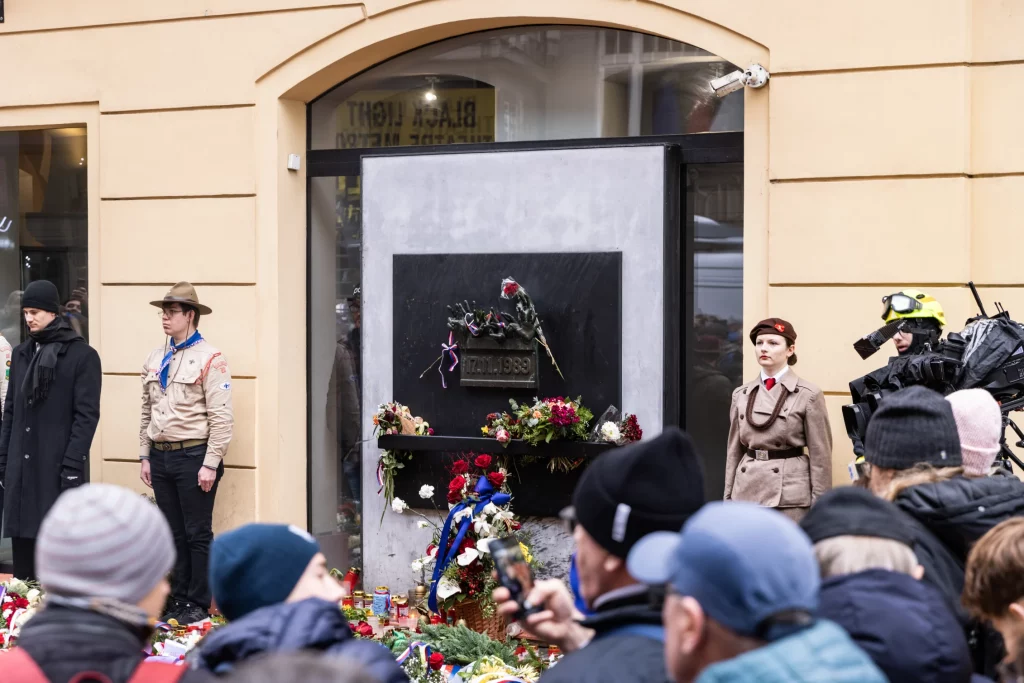

“It’s harder getting into places if you have colored hair and piercings. Also older generations are not as accepting as this as we are now.”
Tattoo and different types of body arts and modifications can be said to have evolved with the passage of time. From the negative collective interpretation it received in the 70’s and the artistic meaning it is being given in the 21st century, one can see that the constant factor is communication and self expression.
What was once categorized as rebellion has become an expression of individuality and freedom. This mirrors a positive step towards liberty, creativity, and the right to express one’s chosen identity in the Czech Republic.
By Amaka Bassey, Andreea Soare, Emilie Steenholt, Geri Kolgega, Laurentiu Vlad, Yichi Zhang
More at: https://iksz.shorthandstories.com/body-mods-as-freedom/index.html